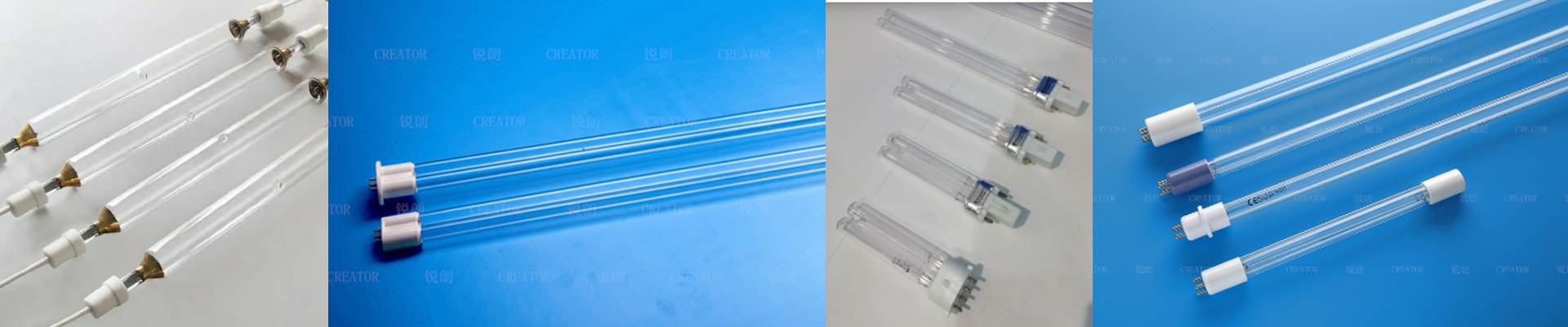
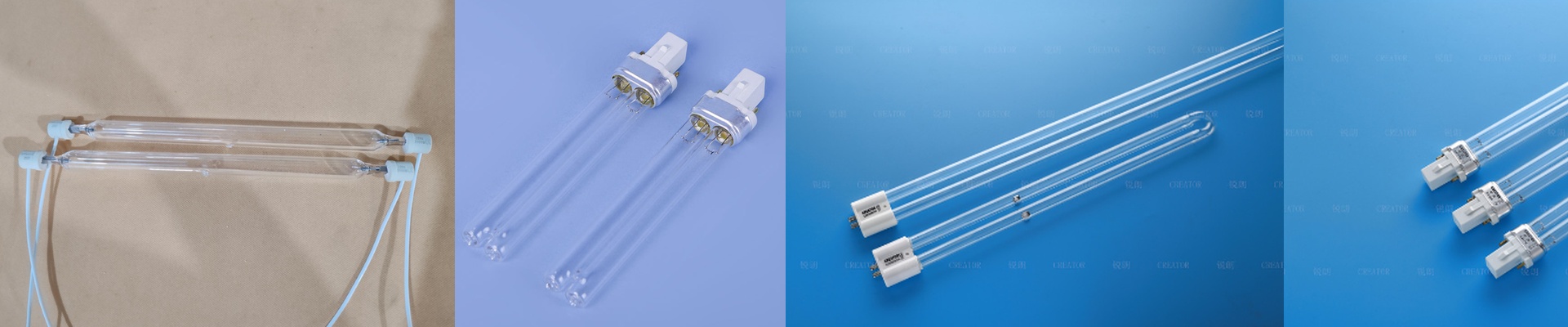
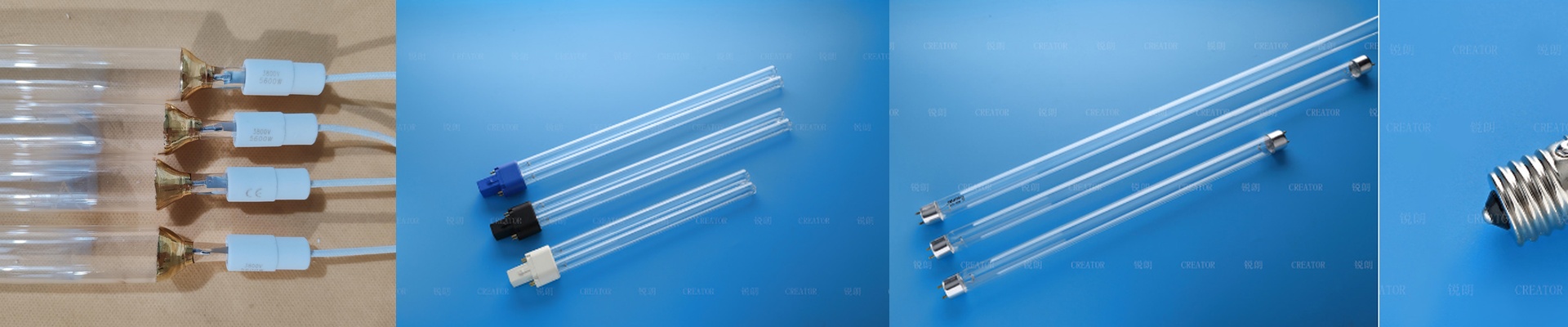
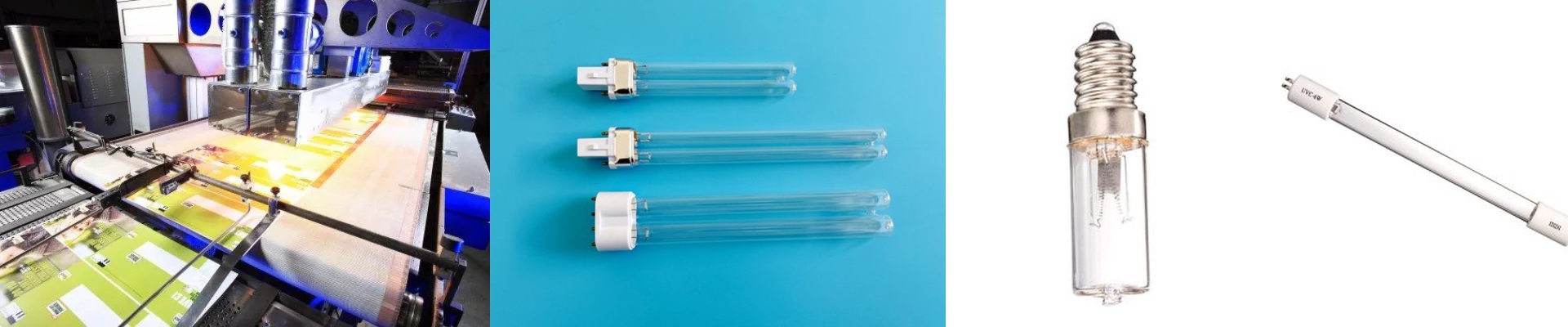
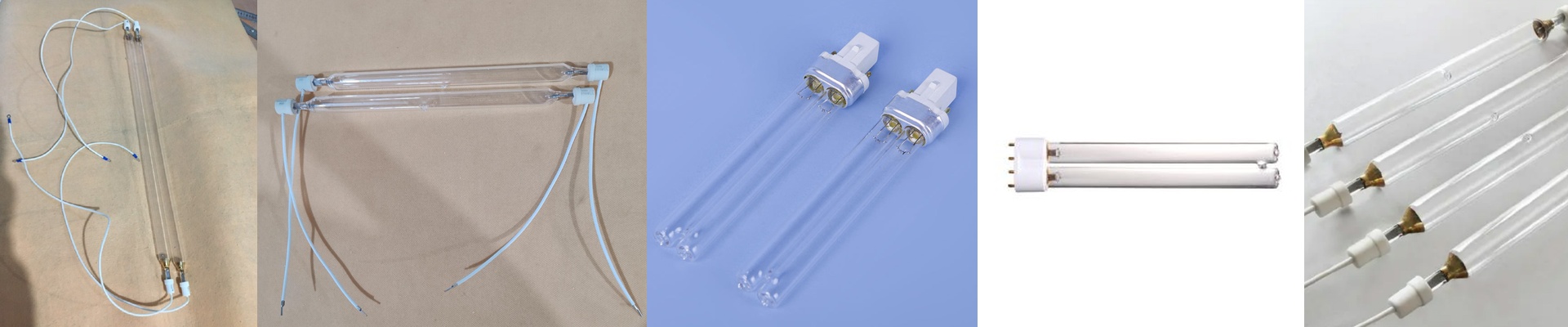
On the press, guesswork gets you nowhere. The lamp fires, the arc tube lights up, and the operator takes one look at the color temperature to decide if the batch is ready to run or if the job is about to slip. That glance isn’t superstition—it’s a quick read on the lamp’s internal chemistry and your first line of defense against a cure that’s about to go sideways. When the spectral output is off, the photoinitiator response is off. And when the response is off, you get tack, adhesion failure, and scrap.
What actually matters: wavelength, irradiance, and dose
UV curing is photochemistry, not a heat treatment. The lamp has to deliver photons at the wavelengths the ink, coating, or adhesive is built to absorb—and deliver enough of them, fast enough, to drive cross-linking before the line speed pulls the substrate out of the beam. A metal halide UV lamp is engineered to shape the emission spectrum—typically with strong output around 365 nm and additional lines between 385 nm and 405 nm, depending on the photoinitiator package. The ink chemistry sets the target. Pigmented layers, thick lamination adhesives, or a white base that blocks shorter wavelengths often need longer-wave UV to get through-cure. Two numbers control what happens on the floor:
- Peak irradiance(often expressed as mW/cm² at a defined distance). That’s the instantaneous photon flux. Too low, and the surface cure stalls. Too high on a thin substrate, and you risk stress, warp, or surface quenching.
- Energy density(mJ/cm²). That’s irradiance integrated over exposure time. Dose is what finishes the reaction. If your dose is short, you can run fast—but only if the lamp output is stable and the reflector optics concentrate the beam where it counts. Wavelength, irradiance, and dose are tied together. Change one, and the others have to follow. Swap a lamp type, and you’re not just changing a consumable—you’re changing the spectral driver of the formulation.
Why color temperature tells you about fill and lamp health
The correlated color temperature (CCT) you see when the lamp warms up is a proxy for what’s inside the arc tube. In a metal halide UV lamp, the fill includes mercury plus metal halide salts, chosen and balanced to tune the spectral lines. The salts dissociate in the arc, and the metal atoms emit at their characteristic wavelengths. The mix determines how much output lands in the UV bands that kick off polymerization versus the visible and near-IR that add heat. A well-formulated lamp usually settles into a consistent warm-white to neutral-white during warm-up, with the CCT landing in a range that matches the intended spectral profile. If the color shifts noticeably from run to run, or drifts as the lamp ages, the fill balance is changing—either because the starting formulation was off, or because the arc tube chemistry is evolving with operating hours. Watch for three field cues:
- **Start-up color stability.**A lamp that ignites and quickly settles into a repeatable hue generally has controlled fill and consistent chemistry. A lamp that flickers, hunts for color, or takes too long to stabilize often has fill inconsistency or electrode conditioning issues.
- **Aging drift.**As hours accumulate, electrodes erode and the internal gas composition shifts. The result is often a gradual change in CCT and a drop in UV output. A quality metal halide lamp is designed to keep that drift within a tight band. A cheap one can drift fast, and that drift tracks with measurable irradiance loss.
- **Visible hot spots.**Uneven color across the arc tube can signal localized arc instability or hot spots, which often precede premature failure and inconsistent dose across the cure window. Color isn’t a substitute for measurement. But on the press, it’s the fastest diagnostic you have. If the lamp looks wrong, measure it. If you can’t measure it, don’t trust it.
How this plays out in real UV curing
In UV offset, flexo, and screen printing, the lamp isn’t just a light source—it’s the curing engine. The substrate is moving. Ink thickness varies. Jobs change. The lamp has to deliver repeatable spectral output so the process window doesn’t collapse. When the metal halide lamp matches the formulation, you see it in the work:
- **Faster cycling without sacrificing cure.**With adequate peak irradiance and the right spectral lines, the photoinitiator generates radicals quickly, letting you run higher line speeds without residual tack.
- **More consistent through-cure on thick or pigmented layers.**Longer-wave components (around 385–405 nm) improve depth penetration. When the spectrum is tuned, you get cross-linking through the layer, not just a skin cure.
- **Less waste from marginal cure.**A stable lamp holds irradiance within a narrow band, so dose stays within spec over the whole run. That means fewer rejects and fewer reprints.
- **Lower operating cost per cured unit.**A lamp that maintains output longer and cures efficiently reduces the need to slow the line or run multiple passes. It also cuts down on energy that ends up as heat, which matters when you’re running all day. In practice, that translates to fewer callbacks for tack, better adhesion on tough substrates, and less downtime chasing cure quality. Predictable lamps make predictable schedules.
Practical checks you can run on the floor
You can size up a metal halide lamp long before the radiometer comes out. Make these part of your routine.
- **Ignition behavior.**A good lamp strikes reliably at the rated voltage and settles quickly. Hesitation, repeated restrike, or a slow run-up points to fill or electrode issues.
- **Color temperature consistency.**Compare warm-up color to the lamp’s expected CCT range. If the hue varies from lamp to lamp, fill tolerance is wide—and spectral output will vary with it.
- **Arc stability.**Watch for arc wander or flicker. Stable arcs give stable irradiance. Flicker introduces dose modulation the press can’t compensate for.
- **End-of-life signs.**As the lamp approaches rated hours, output declines and CCT can shift. A quality lamp gives you a gradual, measurable slope. A weak lamp drops off abruptly, sometimes with color swings you can see. If you keep a log—hours, warm-up time, observed CCT, and measured irradiance at a fixed distance—you build a curve for that lamp type in your environment. That curve is your real spec.
What to measure, and how to tie it back to cure
Color is a cue. Data is what drives the decision.
- **Spectral output.**Confirm the lamp emits at the wavelengths your ink or coating needs. If your formulation is tuned for 365 nm with secondary lines at 385–405 nm, verify the spectrum matches.
- **Peak irradiance.**Measure at the substrate plane. If your process needs 800 mW/cm² to clear a pigmented layer at a given speed and the lamp is delivering 500 mW/cm², the lamp is the limit—no matter how bright it looks.
- **Energy density.**Integrate irradiance over dwell time to get dose. If the dose falls below the ink supplier’s minimum, cross-linking will be incomplete. If it’s way above, you risk substrate heating and adhesion issues.
- **Uniformity.**Map irradiance across the cure width. Reflector condition, lamp alignment, and arc stability determine whether the edges cure the same as the center. When the lamp is right, the numbers line up with the process window. When the lamp is wrong, the numbers tell you before the defects do.
Installation and compatibility: the constraints that matter
Metal halide lamps aren’t plug-and-play across every system. They need ballasts matched to the lamp’s electrical characteristics, the right ignition voltage, and correct orientation. A mismatched ballast pushes the lamp outside its design curve, accelerating electrode wear and shifting the spectrum. Reflector condition matters. A reflector with degraded dichroic coatings or contamination scatters UV and drops irradiance. Even the best lamp can’t make up for optics that have lost their edge. Ozone management is another practical point. Many metal halide UV lamps are ozone-free by design, using doped quartz that blocks the short-wave UV that generates ozone. If your system uses separate ozone removal, verify the lamp envelope and airflow keep ozone at safe levels. Thermal control matters, too. UV curing is efficient, but the lamp and reflector still make heat. Too hot, and the arc tube temperature rises, shifting spectral output and shortening life. Too cool, and efficiency drops. Keep airflow within the manufacturer’s spec and keep the cooling path clean. One more constraint: lamp length and arc gap. The arc length defines the dose profile at a given speed. If you replace a lamp with a different arc length, you change dwell time under the beam. The result can be undercure at the same line speed, even if irradiance looks fine.
The bottom line
On the press, lamp color temperature is a fast read on internal fill and stability. It doesn’t replace measurement, but it’s a practical field check that can keep a bad run from starting. A well-formulated metal halide UV lamp delivers a stable spectral profile, consistent peak irradiance, and predictable dose over its rated life. That predictability keeps the process window open—so you can run faster without losing cure, and run longer without losing quality. If your lamps are showing color shifts, slow warm-up, or visible drift, the cure issues you’re feeling aren’t coincidence. Measure the output. Match the wavelength. Control the dose. Then let the lamp do the one job it has to: make the chemistry happen, on schedule, every time.